Types Of Farm Fencing
Learn the most common types of farm fencing used across Michigan farms and what each does best.
TL;DR
- High tensile wire is strong, affordable, and works for cattle and rotational grazing but needs correct tensioning and grounding
- Woven wire (no climb) keeps smaller animals in, handles predator pressure, and stays tight through Michigan freeze-thaw cycles
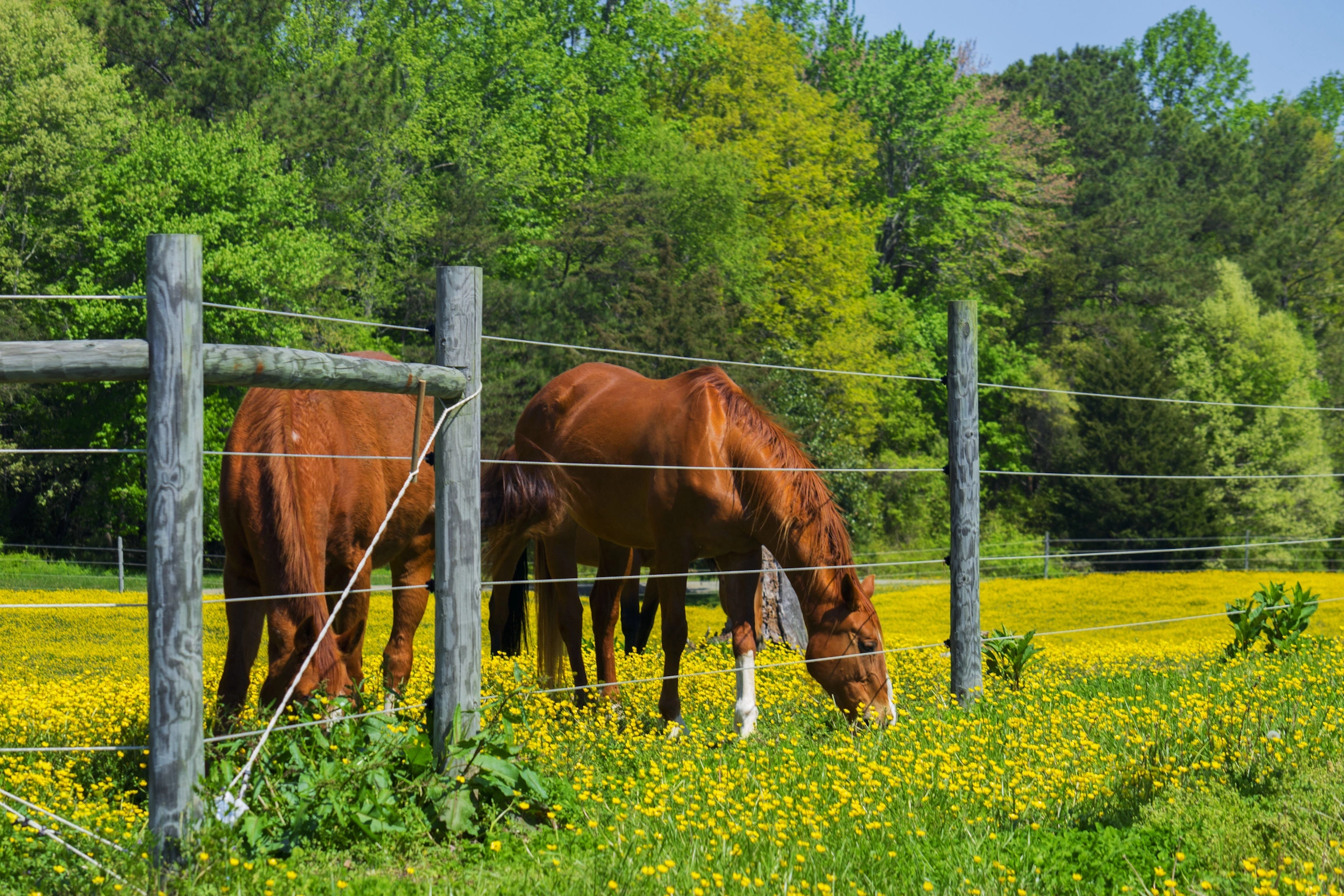
- Board fencing is visible and safe for horses but requires more maintenance in wet Michigan climates
- Electric fencing is flexible and budget-friendly for temporary paddocks or training but needs regular checking
- Choosing the right fence depends on your animals, property layout, predator risk, corner bracing, and long-term budget
Why Farm Fence Type Matters in Michigan
The right farm fence keeps your livestock safe, protects your investment, and holds up through Michigan winters. The wrong one costs you in escaped animals, injuries, constant repairs, and wasted time.
Most Michigan farms use a mix of fence types depending on what animals they run, how much predator pressure they face, whether they rotate paddocks, and how visible the fence needs to be. Clay soil, freeze-thaw movement, and fluctuating water tables all affect how well a fence holds tension and stays upright year after year.
We install agricultural fencing across Michigan farms and see the same patterns: choosing the right wire, post spacing, brace design, and tensioning method for your operation saves money and headaches down the road.
High Tensile Wire Fencing
What It Is
High tensile wire is smooth, galvanized steel wire strung tight between corner and line posts. It runs under high tension, usually between 200 and 250 pounds per strand, and uses inline strainers and springs to maintain that tension through temperature swings.
What It Does Best
- Handles cattle, horses, sheep, and goats when run at the right height and strand count
- Stays tight longer than barbed wire and requires fewer posts
- Works well for rotational grazing when paired with temporary electric polywire or netting
- Resists rust and lasts 30-plus years when tensioned correctly
- Costs less per foot than woven wire or board fencing
What to Watch For
High tensile needs strong corner and H-braces. If your corners pull in or your line posts lean, the wire sags and animals push through. In Michigan clay, that means setting posts deeper than minimum code and using larger diameter braces.
Tensioning matters. Too loose and animals lean on it. Too tight and it snaps in extreme cold or when a deer hits it. Inline springs help absorb shock, but you still need to walk the line after storms and check tension yearly.
Animals that challenge fences regularly, like young bulls or aggressive goats, may need added electric strands or tighter spacing.
Woven Wire (No Climb) Fencing
What It Is
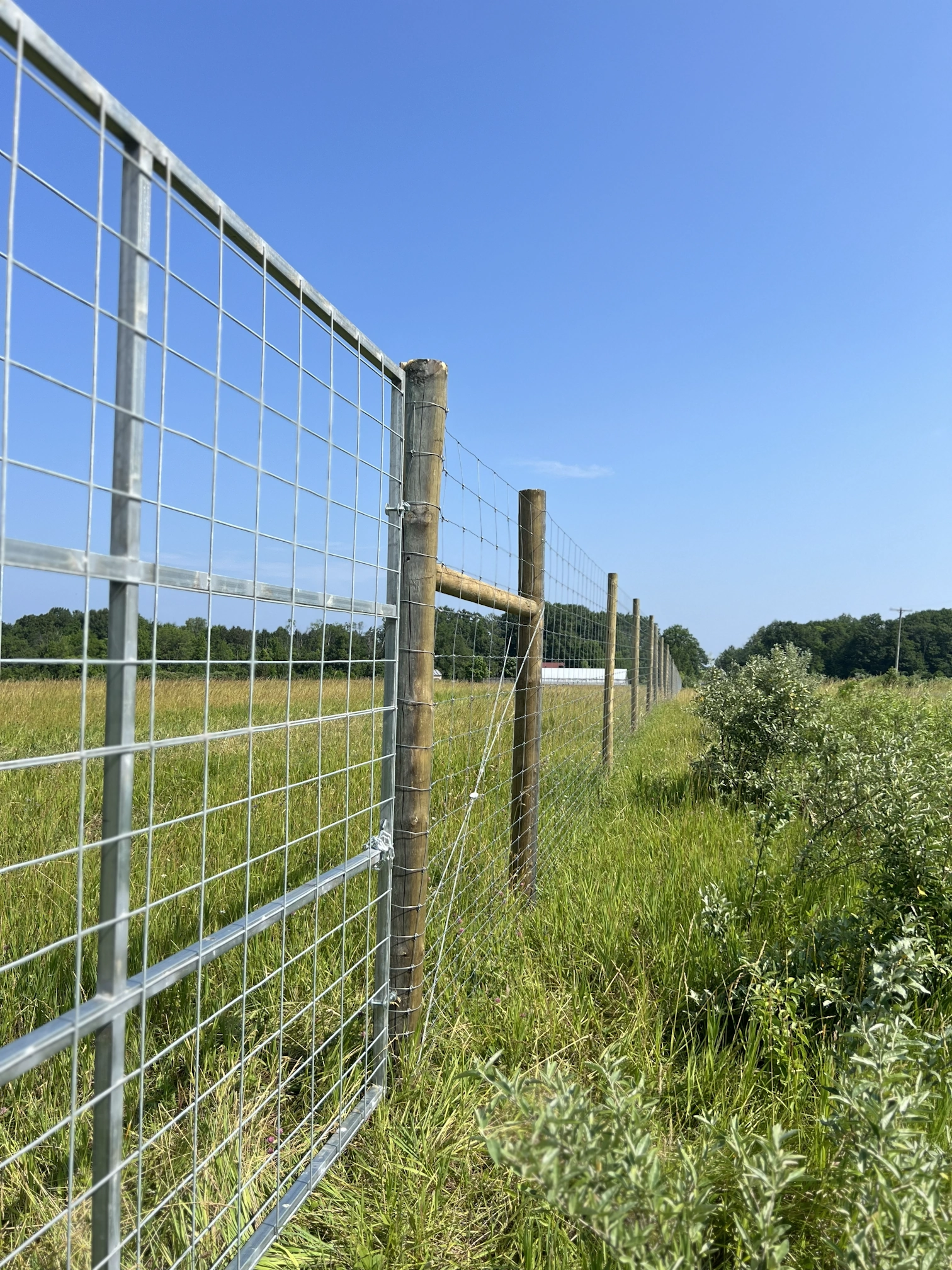
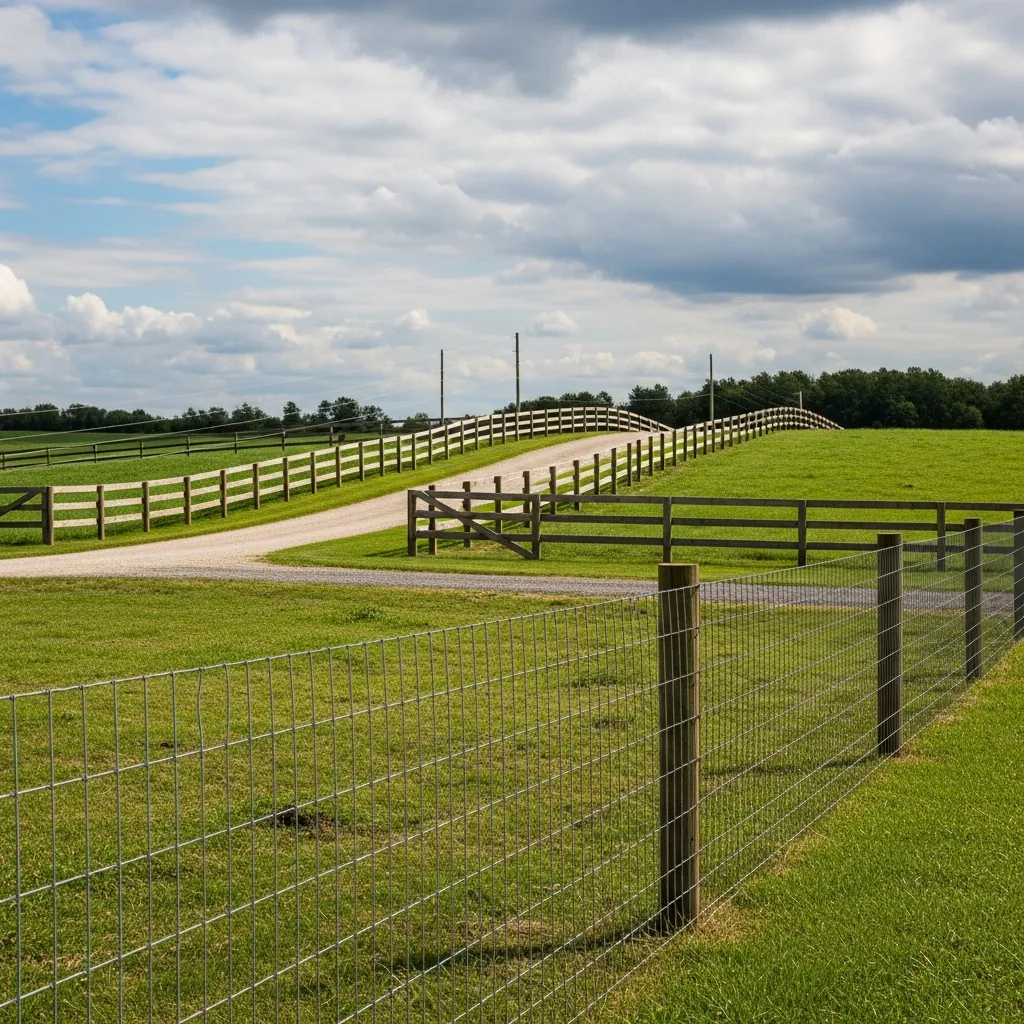
Woven wire is a grid of vertical and horizontal wires welded or knotted together. No climb versions use tight 2x4 inch spacing that keeps hooves, heads, and small predators out.
What It Does Best
- Stops goats, sheep, pigs, and smaller livestock from squeezing through
- Reduces predator entry from coyotes, dogs, and foxes
- Stays secure even when animals lean or rub against it
- Works well around barns, pens, and high-traffic areas
- Holds up through freeze-thaw cycles without losing shape
What to Watch For
Woven wire costs more upfront than high tensile and takes longer to install. You need solid corner bracing, tight stretching, and posts every 10 to 12 feet to keep the wire from sagging.
In wet Michigan soil, wooden posts rot faster under the constant ground contact and moisture. Treated posts or steel T-posts extend the life of your fence line.
Animals that climb, like goats, may still get over a short woven wire fence. Adding a top strand of electric or barbed wire helps.
Board Fencing
What It Is
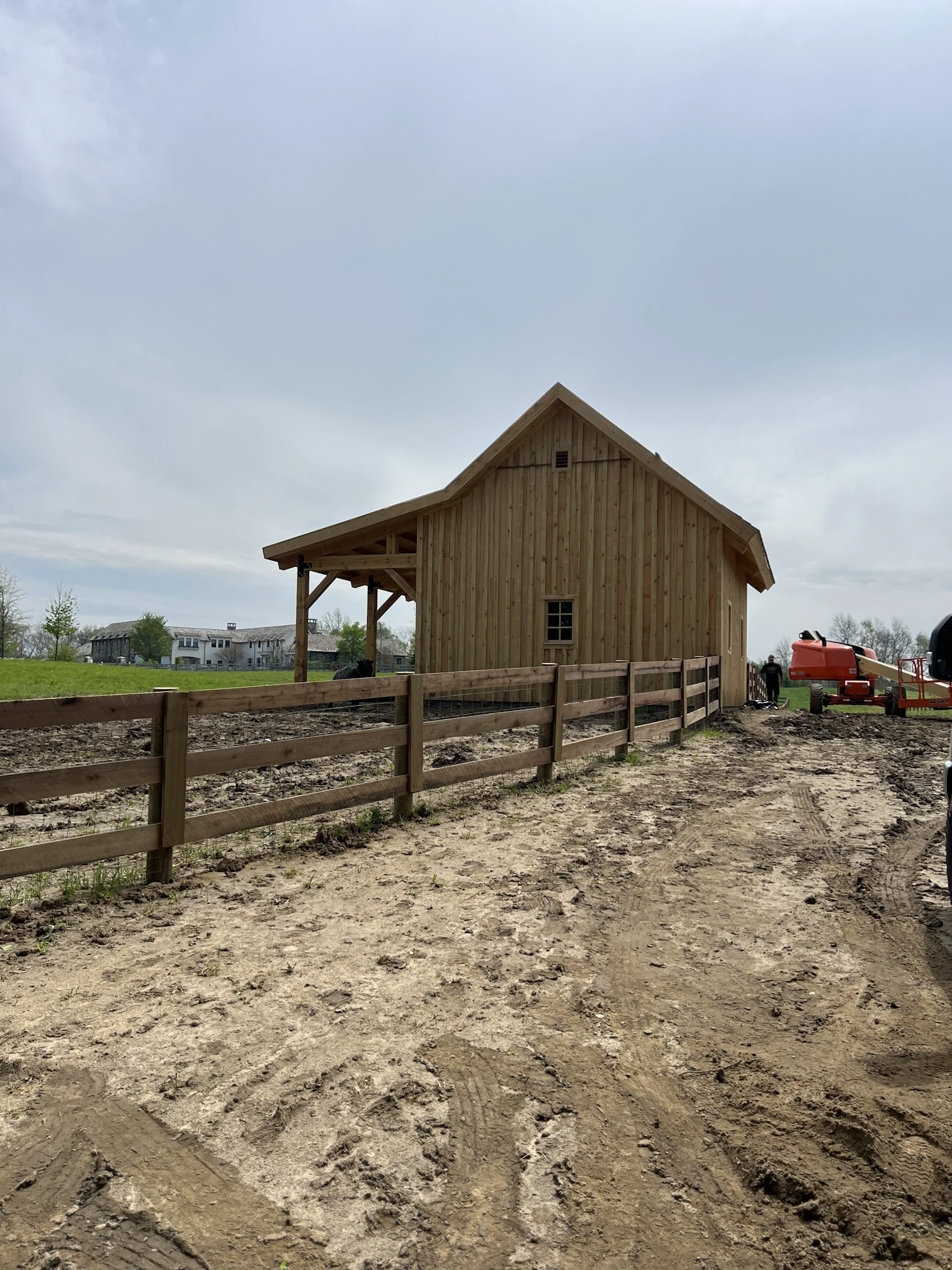
Board fencing uses horizontal wood rails, usually three or four boards high, attached to wooden posts. Painted board fencing is traditional on horse farms and gives a clean, visible boundary.
What It Does Best
- Highly visible to horses and reduces fence injuries
- Looks clean and fits well around barns, arenas, and front pastures
- Can be built with treated lumber, oak, or synthetic board alternatives
- Easy to repair individual boards without replacing the whole line
What to Watch For
Wood fences need regular maintenance in Michigan. Paint peels, boards split, and posts rot at the ground line. Wet springs and freeze-thaw cycles speed up deterioration.
Horses chew on boards, especially if they are bored or lacking minerals. Adding electric offset wire or treating boards with chew deterrent helps.
Board fencing costs more to install and maintain than wire options. Budget for repainting every few years and board replacement as needed.
Electric Fencing
What It Is
Electric fencing uses a charged wire or tape powered by a plug-in or solar energizer. Animals learn to avoid it after a few shocks. It can be permanent or temporary.
What It Does Best
- Works for rotational grazing and temporary paddock divisions
- Trains animals to respect boundaries with low physical pressure
- Costs less than permanent fencing for large acreage
- Easy to move and adjust as grazing plans change
- Effective for horses, cattle, pigs, and sheep when properly grounded
What to Watch For
Electric fences only work when the charge is strong and consistent. Grounding is critical in Michigan clay. Without proper ground rods driven deep and spaced correctly, the shock weakens and animals push through.
Vegetation touching the wire drains power. You need to mow or spray under the wire regularly or use offset insulators to keep weeds clear.
Snow, ice, and fallen branches can short out the line. Check your fence tester weekly during winter and after storms.
Animals with thick coats or young animals that have not been trained may not respect electric fencing right away. Pairing electric with a physical barrier like woven wire improves security.
Barbed Wire Fencing
What It Is
Barbed wire is twisted steel wire with sharp barbs spaced every few inches. It has been used on farms for over a century and is still common for cattle operations.
What It Does Best
- Inexpensive and fast to install over large acreage
- Effective for cattle that respect boundaries
- Handles rough terrain and wooded fence lines
- Widely available and easy to repair with basic tools
What to Watch For
Barbed wire injures horses, especially around legs and eyes. It should not be used in horse pastures or anywhere horses have regular contact.
Smaller livestock like goats and sheep can slip through or get caught in barbed wire. Woven wire or tighter strand spacing works better.
Barbed wire sags over time and needs retightening, especially in freeze-thaw conditions. Weak corners pull in and the whole line loses tension.
Choosing the Right Fence Type for Your Farm
By Livestock Type
- Cattle: high tensile, barbed wire, or electric depending on herd temperament and acreage
- Horses: board, high tensile with visibility markers, or woven wire with electric top strand
- Goats and sheep: woven wire with tight spacing, possibly paired with electric offset
- Pigs: woven wire or electric with multiple strands low to the ground
- Poultry ranging outside coops: electric netting or short woven wire with predator apron
By Property Layout
Large open pastures work well with high tensile or electric. Tight pens, barn lots, and areas near roads need the security and visibility of woven wire or board fencing.
Wooded fence lines or areas with heavy brush benefit from treated posts, barbed wire, or electric that can handle uneven ground and fallen limbs.
By Predator Pressure
If coyotes, stray dogs, or foxes are active, woven wire with tight spacing and possibly a buried apron adds protection. Electric offset wires at nose height also deter predators from testing the fence line.
By Budget and Maintenance
High tensile wire and electric fencing cost less upfront and cover more ground per dollar. Board and woven wire cost more to install but require less retraining and adjustment once up.
Wood fences need the most maintenance. Wire fences need tensioning and vegetation control. Electric fences need regular checking and energizer upkeep.
Fence Installation Factors That Affect Performance
Post Depth and Spacing
Michigan clay shifts with freeze-thaw cycles. Posts need to go below the frost line, usually 42 inches or deeper, and corners need even more depth and bracing to resist pulling.
Post spacing depends on wire type. High tensile can span 30 to 50 feet between line posts if corners are solid. Woven wire needs posts every 10 to 12 feet to prevent sagging.
Corner and H-Brace Strength
Corners take the full load of tensioned wire. Weak corners mean sagging fence lines, leaning posts, and constant retightening.
Proper H-braces with diagonal compression and deep-set posts distribute load and keep tension stable through temperature swings and animal pressure.
Tensioning and Grounding
High tensile wire needs inline strainers and springs. Woven wire needs a come-along or tractor-mounted stretcher pulled evenly to avoid warping.
Electric fences need multiple ground rods, especially in dry or sandy soil. Michigan clay conducts better than sand, but you still need proper grounding for reliable shock delivery.
Common Farm Fencing Mistakes in Michigan
- Using the same post depth and spacing across different soil types
- Skipping corner bracing or using undersized brace posts
- Over-tensioning high tensile wire and snapping it in cold weather
- Running electric without proper grounding or vegetation control
- Installing board fencing without planning for wood rot and chewing
- Mixing incompatible fence types without transition planning
- Setting posts in winter when ground conditions hide drainage problems
When to Call a Fencing Contractor
If you are fencing more than a few acres, handling livestock that need secure containment, or dealing with difficult soil and terrain, hiring a contractor saves time and reduces mistakes.
Boerman Fencing installs all common farm fence types across Michigan. We handle post setting, corner bracing, wire tensioning, gate installation, and fence line layout. We also help property owners choose the right fence type based on animals, budget, and long-term maintenance.
Free estimates, same-day call-back, and clear timelines. Licensed and insured.
Bottom Line
Farm fencing is not one-size-fits-all. The right fence depends on what animals you run, how much predator pressure you face, your property layout, soil type, and maintenance capacity.
High tensile wire works well for cattle and rotational grazing. Woven wire handles smaller animals and predator security. Board fencing keeps horses safe and visible. Electric is flexible and affordable for temporary setups.
Proper corner bracing, correct post depth, and smart tensioning make any fence type last longer and perform better in Michigan conditions. If you are not sure what fits your farm, talk to someone who builds fences daily and knows what holds up.

Zac Boerman leads every build with a simple goal: strong, straight, safe fencing that holds up to Michigan weather and hardworking livestock.