Agricultural Fencing
Michigan-tough farm fencing built to work: woven wire, high-tensile (electric or coated), board, and safe gates—installed clean and square for livestock security and long life.
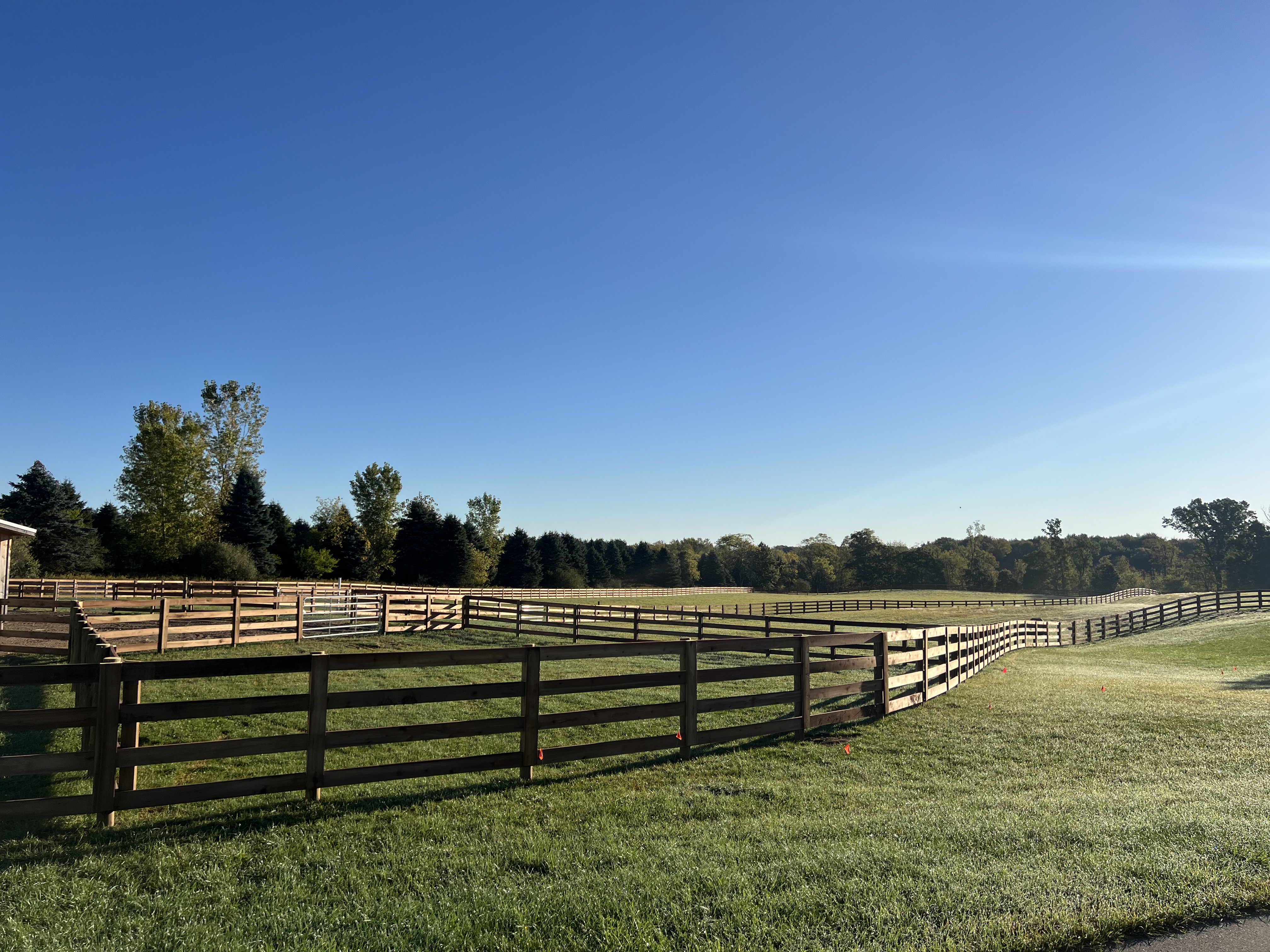
Farm fence installation for Michigan properties
A farm fence needs to fit the animals, the ground, and the way you work. Boerman Fencing, Co. installs agricultural fencing across Michigan, including no-climb woven wire, high-tensile systems, board fencing, and heavy-duty tube gates. Layout and gate planning are part of the on-site walkthrough.
Horse fencing: plan the paddock and access together
For horse properties, start with the number and type of animals, how paddocks connect, and how people and equipment move between them. Tell us about existing fencing, areas used for turnout, and any behaviors that affect containment. A fence intended for one use should not automatically be repeated across every part of the property.
Boerman's agricultural options include no-climb woven wire, three- or four-board layouts, and coated-wire options where appropriate. Material selection should account for visibility, openings, animal contact, and the upkeep you are prepared to do. Discuss the specific system during the walkthrough rather than choosing from a photo alone.
Plan gate openings for the equipment you actually use and consider how you move animals between areas. For background on budgeting and alternatives, read our low-cost horse fencing guide; contact Boerman for an installation plan matched to your property.
Cattle fencing: separate perimeter and working-area needs
For cattle, explain whether the project is a boundary fence, a pasture division, or part of a working area. Herd size, animal type, existing fence condition, and the way gates are used all help define the scope. Include the routes needed for tractors, trailers, and routine pasture access.
Boerman offers woven wire and high-tensile systems, with energizers, insulators, and coated wire as needed. The appropriate configuration depends on the animals and intended use. Corners, braces, gate supports, and changes in grade are part of the installation plan, not details to leave until the end.
Bring a rough layout showing pasture divisions and gate locations. Discuss permanent boundaries separately from any future changes in how the property will be managed, so the estimate reflects the work you need now.
What Boerman's agricultural installation includes
- On-site walkthrough, fence layout, and gate planning.
- MISS DIG 811 coordination where applicable.
- Corner and H-brace construction, driven line posts, and wire tensioning to specification.
- No-climb woven wire, high-tensile, or board options selected for the project.
- Heavy-duty tube gates, latches, and hardware.
- Final walkthrough and a five-year workmanship warranty.
Prepare the fence line and plan for upkeep
Tell us about brush, old fencing, soft areas, grade changes, and access restrictions before installation. If clearing is needed, review our land management and fence-line preparation service so the preparation and installation scopes can be discussed together.
After installation, regularly check gates, latches, posts, and wire for damage or changes. Vegetation, fallen branches, and animal contact can affect performance. Electric components also need the inspection and maintenance specified for the selected system. Discuss care during the final walkthrough.
Agricultural fencing questions
Do horses and cattle need the same fence?
Not necessarily. Describe the animals, intended use, and working layout so the system can be selected for that part of the property.
Can you include farm gates?
Yes. Heavy-duty tube gates, latches, and hardware are part of Boerman's agricultural offering. Confirm the number, openings, and equipment access during layout planning.
What information helps with a quote?
Send the property location, a rough map, approximate length, animal type, photos, gate needs, and any removal or clearing requirements.
Where can I compare farm fence systems?
Our livestock fencing guide provides broader background. This service page is the starting point for planning an installed fence with Boerman.
Request a farm fencing estimate
Check our Michigan service areas and tell us about your horse or cattle fencing project. We will discuss the property, the intended use, and the next steps for an estimate.
Before requesting a quote, review our fence installation cost guide for the layout, gates, and site details that affect the scope.


Why Choose Us?
Michigan-born and barn-raised, we build fences that handle clay soil, freeze-thaw, and hard daily use. We answer fast, build clean, and stand behind every post.

