Pasture Fence Ideas
A practical guide to choosing the right pasture fence for Michigan livestock operations, from woven wire to high tensile and board systems.
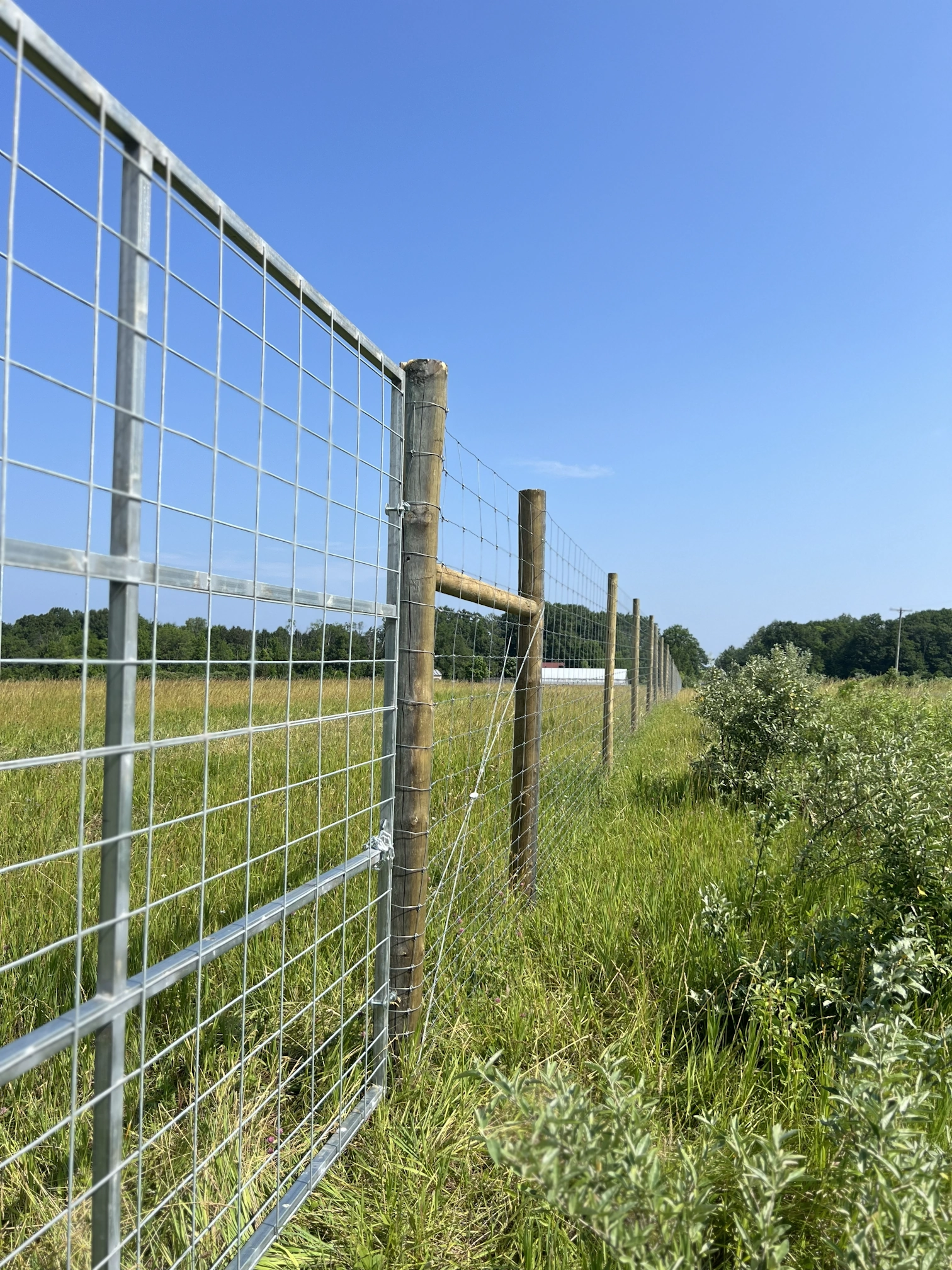
TL;DR
- Woven wire is the most versatile choice for mixed livestock and works well in Michigan's freeze-thaw conditions when installed with proper corner bracing and post depth
- High tensile is cost-effective for rotational grazing and larger acreage but requires skilled tensioning and grounded corners
- Board fencing and no climb wire are best for horses, smaller paddocks, and properties where visibility and safety matter most
- All Michigan pasture fences need posts at least 3.5 feet deep, solid H-braces at corners and ends, and gates planned for vehicle access and daily stock movement
- Clay soil, frost heave, and wet springs mean your fence needs room to move without losing tension or breaking posts
What Makes a Good Pasture Fence in Michigan
A good pasture fence keeps your animals where they belong, holds up through Michigan winters, and makes daily livestock work easier instead of harder. The right choice depends on what you are raising, how much land you are working with, whether you rotate pastures, and how visible you need the fence line to be.
Michigan conditions add real constraints. Clay soil makes post setting harder and frost heave can lift poorly anchored posts. Freeze-thaw cycles stress wire and boards. Wet springs turn fence lines into mud. Your pasture fence has to handle all of that and still hold tension, stay upright, and function when you need to move animals or bring equipment through.
Most livestock operations in Michigan use one of four main fence types, sometimes combined depending on the use case and budget.
Woven Wire Fencing
What It Is
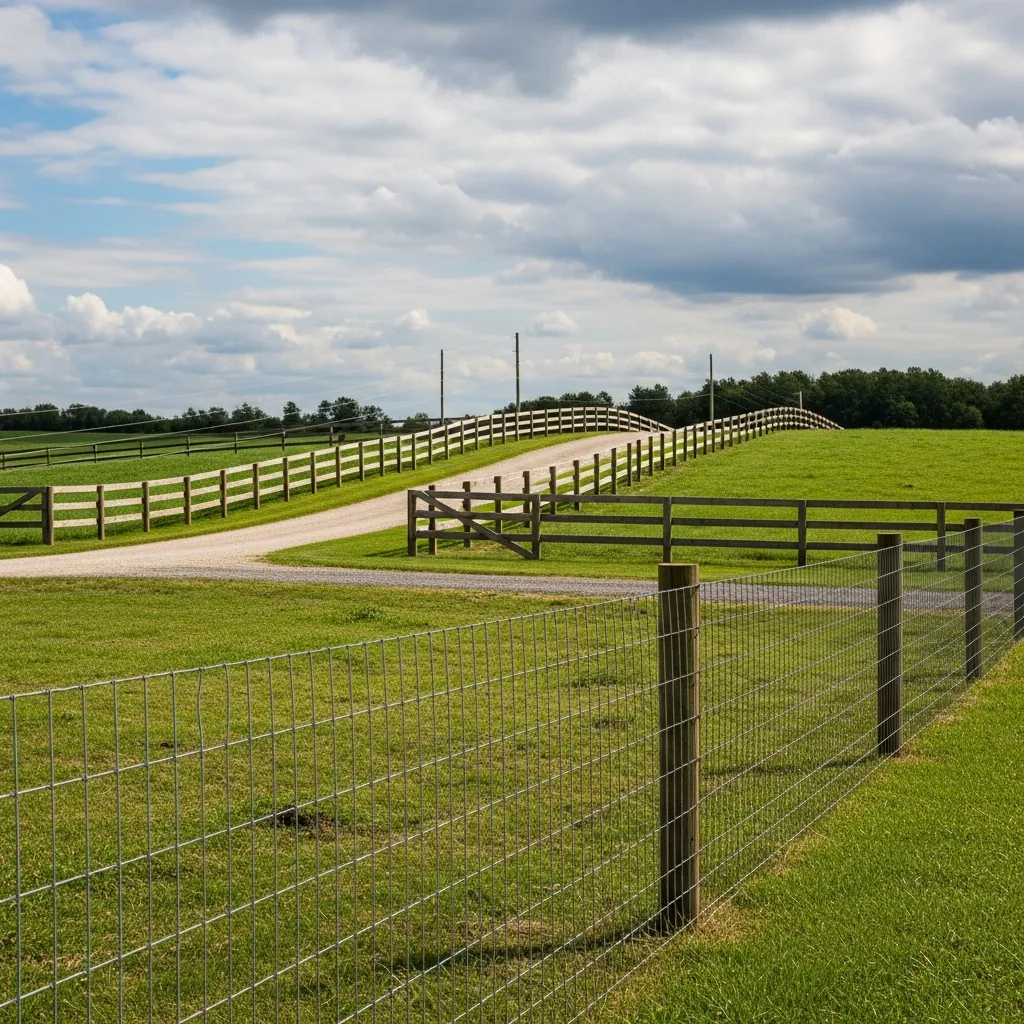
Woven wire is a rolled wire fabric with horizontal line wires and vertical stay wires woven or welded together. It comes in different heights and spacing patterns depending on what you are fencing. Common options include 330-12-12 for general livestock and 939-6-12 for sheep, goats, or smaller animals.
What It Does Well
Woven wire is the most versatile pasture fence. It works for cattle, horses, sheep, goats, pigs, and mixed herds. It holds up in Michigan weather when installed correctly. Animals can see it clearly. It does not rely on electricity. It handles pressure from animals rubbing or pushing without losing shape.
It also lasts. A properly installed woven wire fence with treated posts and good corner bracing can run 20 to 30 years with minimal maintenance.
What to Watch For
Woven wire costs more up front than high tensile. Installation takes longer. You need strong corner and end bracing because the fence holds constant tension. Posts need to be set deep, at least 3.5 feet in Michigan clay, and line posts should be spaced no more than 12 feet apart.
If the fence is not tensioned correctly during installation, it will sag or wave. If corner braces fail, the whole line loses integrity.
High Tensile Fencing
What It Is
High tensile fencing uses smooth or barbed wire under high tension, typically 200 to 250 pounds per strand. It is held by inline strainers and anchored at heavily braced corners and ends. You can run it as an electric fence or non-electric depending on the setup.
What It Does Well
High tensile covers more ground for less money. You can space line posts 40 to 50 feet apart, which cuts material and labor costs. It works well for rotational grazing because you can add interior cross fences easily. It is strong and durable when installed right.
For larger Michigan cattle operations or properties with rolling terrain, high tensile offers a good balance of cost, function, and longevity.
What to Watch For
High tensile requires experience to install correctly. Tensioning has to be precise. Corner and end bracing must be rock solid, usually H-braces or box braces set deep and diagonal-braced with treated wood. If tension is lost or a corner post shifts, the fence fails fast.
Cattle and horses usually respect it, especially when electrified. Smaller livestock like goats and sheep may require more strands or tighter spacing. Visibility can be an issue for horses unless you add a top board or flag the wire.
Board Fencing
What It Is
Board fencing uses horizontal wooden rails attached to posts, typically three or four boards high. It is the traditional horse fence and still common on smaller Michigan farms, hobby farms, and properties where appearance matters.
What It Does Well
Board fencing is highly visible, which is critical for horses. It looks clean and fits well on residential or semi-rural properties. It can handle some impact without injuring animals. Horses respect it and are less likely to run through it compared to wire.
It also gives you flexibility. You can add a top rail for visibility, electrify a single strand to keep horses from leaning, or combine it with woven wire on the bottom for smaller animals.
What to Watch For
Wood requires maintenance. Boards crack, warp, rot, and need repainting or staining. Treated lumber lasts longer but still needs inspection and repair every few years. Horses chew, kick, and lean on boards, especially if bored or testing boundaries.
Board fencing is more expensive than wire and does not scale well to large acreage. It works best for paddocks, smaller pastures, and high-visibility areas near barns or roads.
No Climb Wire Fencing
What It Is
No climb wire is a type of woven wire with small, tight rectangular openings, usually two inches by four inches. It is designed to prevent hooves, legs, and heads from getting caught.
What It Does Well
No climb is the safest option for horses, especially foals, and works well for goats and sheep. The tight grid prevents injuries and escapes. It holds tension well and lasts as long as standard woven wire when properly installed.
Many Michigan horse owners use no climb for foaling paddocks, stallion runs, or any area where safety is the priority.
What to Watch For
No climb costs more than standard woven wire. Installation is similar but requires attention to tensioning and corner bracing. It is heavier to handle and slower to unroll and stretch.
It is worth the cost in high-risk situations but may be overkill for general cattle pasture or low-traffic areas.
Planning Your Pasture Fence
Start With Your Livestock
What you are raising drives most of your fence decisions. Cattle need strong perimeter fencing but can work with fewer strands or simpler designs. Horses need visibility and safety. Goats need tight spacing and solid corners because they test everything. Sheep need similar containment to goats. Pigs need strength low to the ground and often benefit from a hot wire to discourage rooting.
Think About Rotation and Gates
If you rotate pastures, plan your fence layout and gate placement early. Gates should be wide enough for equipment, positioned where you actually move animals, and built to last. Cheap gates sag and become a maintenance headache. Good gates cost more but save time and frustration.
Cross fencing for rotational grazing works well with high tensile or temporary polywire systems. Permanent perimeter fencing can be woven wire or board, with simpler interior divisions.
Plan for Michigan Soil and Weather
Clay soil requires deeper post holes and sometimes gravel backfill to manage freeze-thaw movement. Posts should be set at least 3.5 feet deep, and corner posts often go deeper. Treated posts last longer in wet conditions and reduce replacement cycles.
Leave room for frost heave. A fence that is over-tensioned in summer can snap or pull posts in winter. A fence installed too loose in winter will sag when the ground thaws.
Mark Utilities Before You Dig
Call MISS DIG 811 before any post work. Utility strikes are dangerous, expensive, and avoidable. Wait for clearance before setting posts or driving ground rods for electric systems.
Combining Fence Types
Many Michigan farms use more than one fence type depending on the area and purpose. Common combinations include:
- Woven wire perimeter with high tensile cross fencing for rotational grazing
- Board fencing near barns and roads with woven wire on back pastures
- No climb wire in foaling paddocks with standard woven wire elsewhere
- High tensile electrified perimeter with board or woven wire in high-visibility areas
Combining systems lets you control cost, match the fence to the use, and still maintain a functional, safe operation.
What to Do Next
Walk your property and map where fencing will go. Identify corners, gates, low spots, and areas where drainage or terrain might cause issues. Measure your perimeter and cross fence runs. Count how many gates you will need and where.
Decide what livestock you are managing now and what you might add later. Think through your daily routine and how the fence will support or complicate it.
If you are unsure what type of fence fits your operation, talk to someone who installs pasture fencing regularly in Michigan. A site visit can clarify what will work, what will not, and where you can save money without cutting corners on function or safety.
Boerman Fencing Co. works with Michigan livestock operations statewide. We install woven wire, high tensile, board, no climb, and electric fence systems. We also handle fence line clearing, post setting, corner bracing, and gate installation. If you need help planning or pricing a pasture fence project, contact us for a free estimate.
Bottom Line
Pasture fencing in Michigan needs to match your livestock, fit your land, and hold up through freeze-thaw cycles and clay soil conditions. Woven wire works for most situations. High tensile saves money on larger acreage. Board and no climb fencing are best for horses and high-risk areas. All systems require deep posts, solid corner bracing, and proper tensioning. Plan for gates, rotation, and daily use before you start. A well-installed pasture fence makes livestock management easier and lasts decades with minimal maintenance.

Zac Boerman leads every build with a simple goal: strong, straight, safe fencing that holds up to Michigan weather and hardworking livestock.