Livestock Fencing Guide
Learn how to choose and install the right livestock fence for cattle, horses, sheep, goats, and other animals in Michigan.
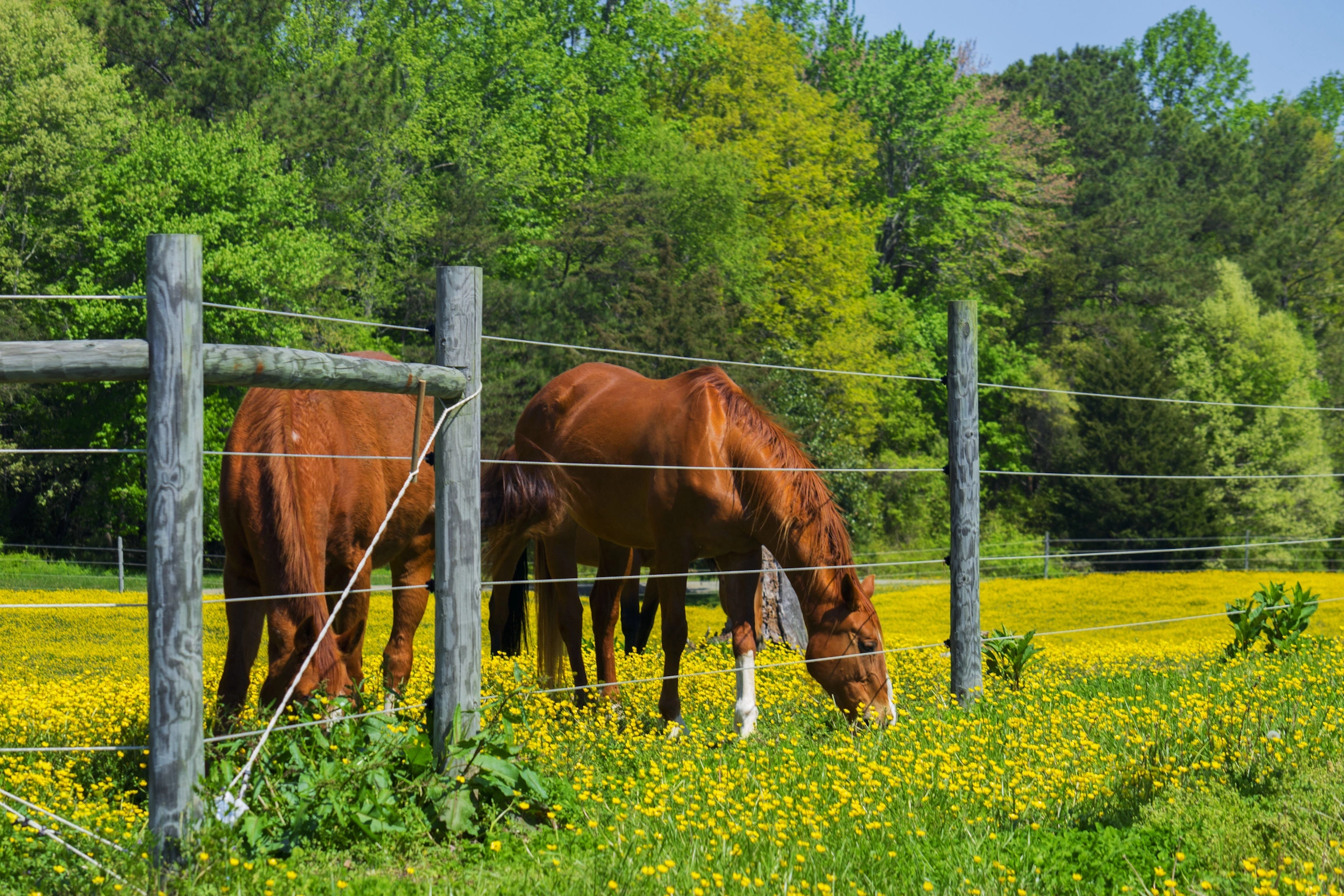
TL;DR
- Choose fence type based on your animals: woven wire for horses and cattle, electric for rotational grazing, high tensile for cost-effective perimeters, board for visibility and safety.
- Plan for Michigan conditions: deeper post holes in clay soil, extra bracing for freeze-thaw movement, and corner H-braces strong enough to hold tension year-round.
- Post spacing and wire height depend on species, with horses needing 4 to 5 boards or tight woven wire at 54 to 60 inches, cattle handling high tensile at 48 inches, and goats requiring no-climb woven wire to prevent escape.
- Gate placement matters as much as fence quality: install gates where you load, feed, move animals between pastures, and access equipment without tearing up the fence line.
- Maintenance is easier when you build it right: proper tensioning, solid corner braces, and rot-resistant posts reduce long-term repairs and keep animals contained safely.
What Livestock Fencing Actually Does
Livestock fencing contains animals, protects pasture rotation, keeps predators out, and marks property boundaries. It also reduces labor by eliminating the need to constantly check on animals that would otherwise wander or break through weak barriers.
In Michigan, your fence has to handle freeze-thaw cycles, clay soil that shifts and heaves, and animals that test weak spots when they are hungry, curious, or spooked. A fence that works in summer can fail in winter if the posts are shallow, the wire loses tension, or the gates sag from frost movement.
The right livestock fence depends on what you are raising, how much land you are working with, whether you rotate pastures, and how much visibility and safety you need. There is no single best fence. The best fence is the one that matches your operation and holds up under real Michigan conditions.
Common Livestock Fence Types
Woven Wire Fencing
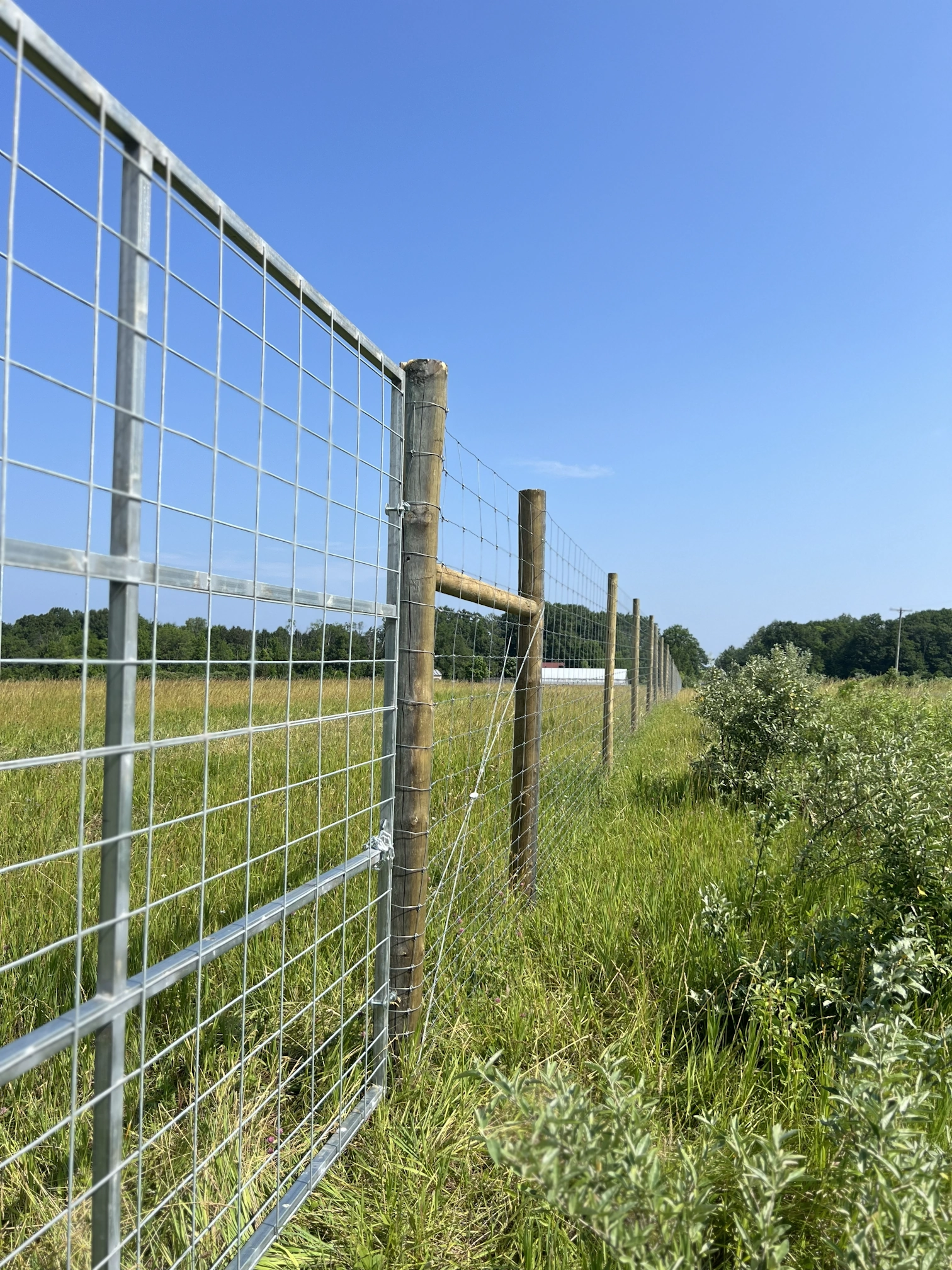
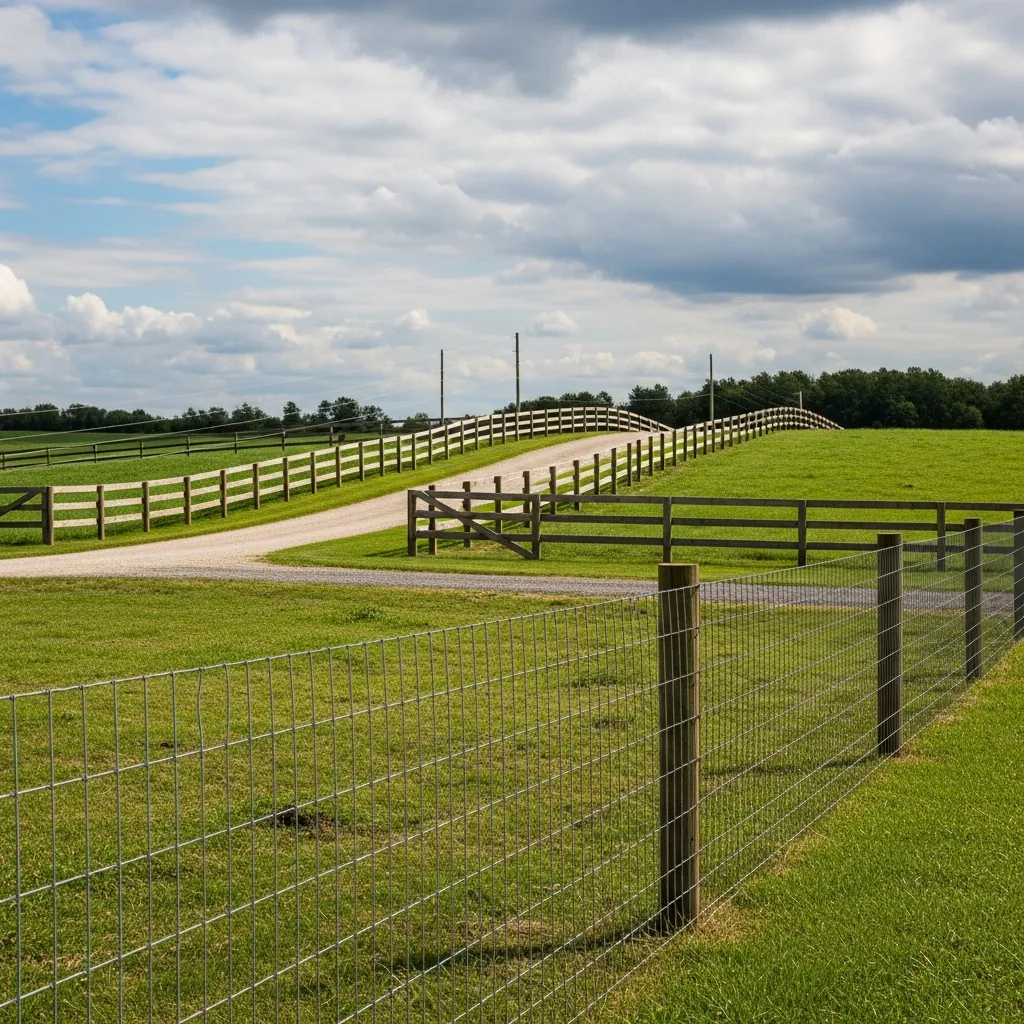
Woven wire is one of the most common choices for livestock because it is durable, flexible, and keeps animals in without constant monitoring. It comes in different heights and spacing patterns depending on what you are fencing.
- No-climb woven wire: tight 2-inch by 4-inch spacing that prevents hooves from getting caught and stops small animals like goats and sheep from climbing or squeezing through.
- Standard woven wire: wider spacing that works well for cattle and larger livestock but may not contain smaller animals or stop predators.
- Combines well with a top board or electric wire for added visibility or horse safety.
Woven wire requires solid corner bracing and proper tensioning. If the wire is loose or the corners shift, the fence will sag and animals will push through or climb over.
High-Tensile Wire Fencing
High-tensile fencing uses smooth galvanized wire under high tension, supported by wood or steel posts. It is cost-effective for large perimeters and works well for cattle when installed correctly.
- Requires fewer posts than woven wire because the tension carries the load.
- Corner and H-braces must be strong enough to handle constant tension without pulling out or twisting.
- Not ideal for horses unless combined with visibility aids like boards or colored tape, since horses may not see smooth wire until they are too close.
- Can be electrified for added containment and behavior control.
High-tensile systems need proper installation. If the wire is not tensioned correctly or the bracing is weak, the fence will lose its structure and fail.
Electric Fencing
Electric fencing trains animals to respect the boundary through a mild shock. It is commonly used for rotational grazing, temporary paddocks, and behavior management.
- Polywire, polytape, or smooth wire options depending on visibility needs and animal type.
- Requires a reliable charger, proper grounding, and regular vegetation management to prevent shorts.
- Works well for cattle and horses once they are trained, but may not contain goats or pigs that test boundaries constantly.
- Can be combined with woven wire or board fencing as a top or offset strand to reinforce containment.
Electric fencing is not a standalone solution for all situations. It works best when animals have been introduced to it properly and when you maintain the system to prevent power loss.
Board Fencing
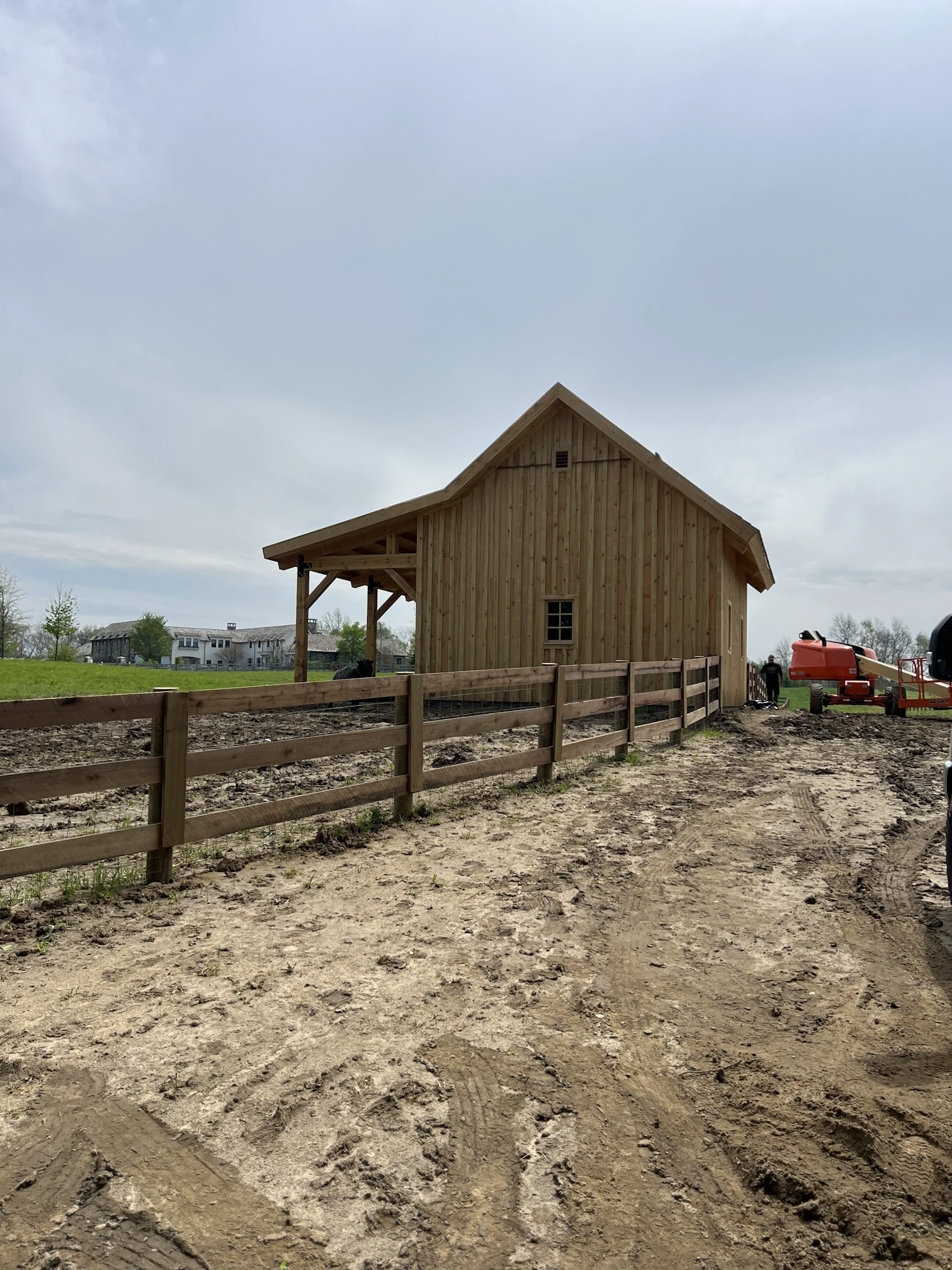
Board fencing is the most visible and traditional option, often used for horses because they can see it clearly and are less likely to run into it.
- Typically 3 to 5 horizontal boards depending on height and animal size.
- Requires strong posts set deep enough to handle board weight and animal pressure.
- Wood boards need maintenance: painting, staining, and replacing rotted or broken boards over time.
- Vinyl board fencing reduces maintenance but costs more upfront and can crack in cold Michigan winters.
Board fencing looks clean and works well near roads, property lines, and high-visibility areas. It is more expensive than wire options but provides a level of safety and appearance that some operations require.
Choosing the Right Fence for Your Animals
Horses
Horses need fencing they can see and that will not injure them when they run, spook, or test the boundary. Woven wire with a top board, board fencing, or electric tape with visibility are common choices.
- Fence height: 54 to 60 inches depending on breed and behavior.
- Avoid barbed wire: it causes serious injuries when horses panic or get tangled.
- Use no-climb woven wire to prevent hoof entanglement.
- Install gates wide enough for equipment and trailers.
Cattle
Cattle are strong and will push on fencing, but they generally respect a well-built perimeter. High-tensile, woven wire, or electric fencing all work depending on your management style.
- Fence height: 48 to 54 inches for most cattle.
- High-tensile wire is cost-effective for large pastures.
- Electric wire can be added as a top or mid strand to reinforce behavior and reduce fence pressure.
- Plan gates where you feed, load, and move cattle between pastures.
Sheep and Goats
Sheep and goats are escape artists. They will test every weak spot, climb on horizontal supports, and squeeze through gaps. No-climb woven wire is the standard choice.
- Fence height: 48 inches minimum for sheep, 54 inches or more for goats.
- Avoid board fencing with horizontal rails that goats can climb.
- Electrify the top and bottom strands to discourage climbing and digging.
- Bury wire or add a ground barrier if predators are a concern.
Pigs
Pigs root, push, and dig. Fencing must be strong at ground level and electrified to discourage rooting behavior.
- Use woven wire with a bottom electric strand close to the ground.
- Posts need to be set deep and braced well because pigs will push hard on corners and gates.
- Gates should swing freely and latch securely, as pigs will lift and manipulate weak closures.
Installation Considerations for Michigan Farms
Post Depth and Soil Conditions
Michigan soil varies from sandy loam to heavy clay. Clay soil heaves during freeze-thaw cycles, which can push posts up or shift them out of alignment.
- Set corner and gate posts at least 3 feet deep, deeper in loose or sandy soil.
- Use concrete around corner posts in clay soil to resist frost movement.
- Line posts can be driven or augered depending on soil type and fence style.
Corner and H-Bracing
Corners and gates carry the most stress. Weak bracing leads to sagging wire, leaning posts, and gates that drag or will not close.
- Build corner braces with strong compression and tension members.
- Use treated posts rated for ground contact.
- H-braces should be installed at angle changes, long runs, and before gates.
Proper bracing makes the difference between a fence that holds tension for years and one that needs constant adjustment.
Gate Placement and Sizing
Gates should be located where you actually use them. A gate in the wrong spot creates extra work and increases the chance of damaging the fence line when moving equipment or animals.
- Install gates where you load trailers, move animals between pastures, and bring in feed or equipment.
- Size gates wide enough for tractors, trailers, and hay equipment, not just animals.
- Use heavy-duty hinges and latches that will not sag or fail under repeated use.
- Plan for drainage around gates so they do not become mud pits in spring or after heavy rain.
Maintenance and Longevity
Livestock fencing requires regular inspection and minor repairs to stay effective. A well-built fence reduces how often you need to make fixes, but no fence is maintenance-free.
- Walk the fence line seasonally to check for loose wire, broken boards, leaning posts, or damaged gates.
- Retension high-tensile wire as needed, especially after winter freeze-thaw movement.
- Trim vegetation along electric fencing to prevent shorts and power loss.
- Replace rotted or damaged posts before they fail under load.
- Check gates for alignment, sagging, and latch function.
Catching small problems early prevents larger failures and keeps animals contained safely.
When to Call a Fence Contractor
You can handle small repairs and maintenance on your own, but new installations, large perimeter projects, and complex bracing work are usually better done by experienced hands.
Professional installation makes sense when you need:
- A full perimeter fence for a new farm or expanded pasture.
- Proper corner bracing and tensioning on high-tensile or woven wire systems.
- Gates installed at the right height, alignment, and swing for heavy equipment use.
- Fencing that meets township or county requirements for livestock containment.
- A fence that will last 20 years or more without constant repairs.
Boerman Fencing Co. installs agricultural fencing across Michigan, including woven wire, high-tensile, board, and electric options. We handle post setting, bracing, tensioning, and gate installation so your fence holds up under real farm conditions.
Bottom Line
Livestock fencing works when it matches your animals, your land, and your management style. Horses need visibility and safety. Cattle need strength and proper height. Goats and sheep need tight spacing and predator protection. Every system requires solid corner bracing, proper post depth, and gates placed where you actually use them.
In Michigan, your fence also has to handle freeze-thaw movement, clay soil, and seasonal weather that tests weak spots. Building it right the first time reduces long-term repairs and keeps your operation running smoothly.
If you are planning a new livestock fence or need to replace an old one that is failing, Boerman Fencing Co. offers free estimates and clear timelines for agricultural fencing projects statewide. We will walk your property, talk through your needs, and build a fence that works for your animals and your land.

Zac Boerman leads every build with a simple goal: strong, straight, safe fencing that holds up to Michigan weather and hardworking livestock.